

AI Solution in Healthcare
AI Solution in Healthcare
AI Solution in Healthcare
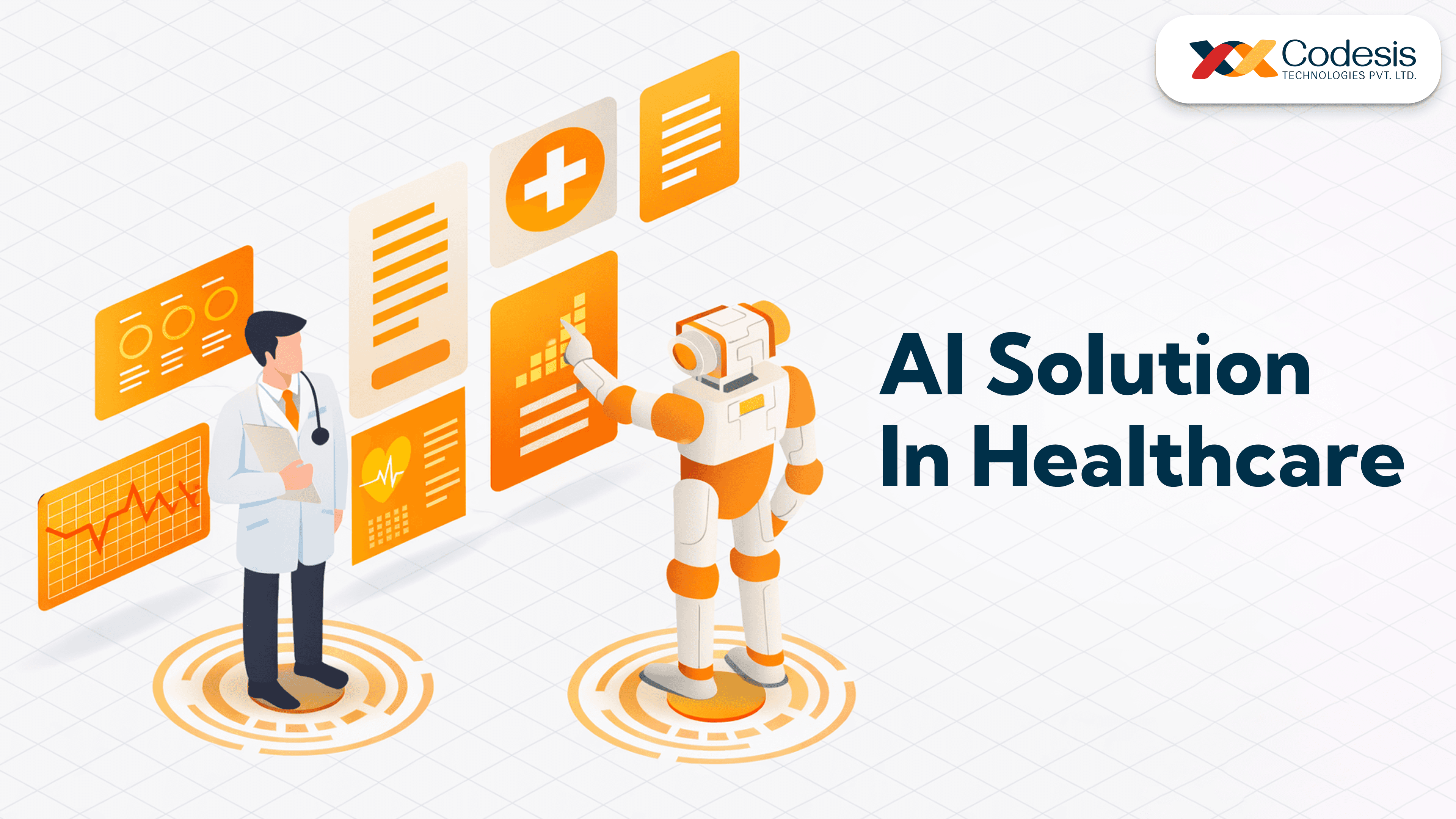
An AI solution in healthcare helps providers, insurers, and healthtech companies turn complex data into clear insights. These insights support better decisions, improve efficiency, and lead to better patient outcomes.
Healthcare organisations generate large volumes of clinical, operational, and patient data every day. However, much of this data is not fully used because systems are fragmented and processes are still manual.
Modern healthcare demands accuracy, speed, and scalability. Artificial intelligence analyses patterns in healthcare data that traditional systems often miss. It can also integrate with existing healthcare platforms without disrupting workflows.
An AI solution in healthcare helps providers, insurers, and healthtech companies turn complex data into clear insights. These insights support better decisions, improve efficiency, and lead to better patient outcomes.
Healthcare organisations generate large volumes of clinical, operational, and patient data every day. However, much of this data is not fully used because systems are fragmented and processes are still manual.
Modern healthcare demands accuracy, speed, and scalability. Artificial intelligence analyses patterns in healthcare data that traditional systems often miss. It can also integrate with existing healthcare platforms without disrupting workflows.
An AI solution in healthcare helps providers, insurers, and healthtech companies turn complex data into clear insights. These insights support better decisions, improve efficiency, and lead to better patient outcomes.
Healthcare organisations generate large volumes of clinical, operational, and patient data every day. However, much of this data is not fully used because systems are fragmented and processes are still manual.
Modern healthcare demands accuracy, speed, and scalability. Artificial intelligence analyses patterns in healthcare data that traditional systems often miss. It can also integrate with existing healthcare platforms without disrupting workflows.
An AI solution in healthcare helps providers, insurers, and healthtech companies turn complex data into clear insights. These insights support better decisions, improve efficiency, and lead to better patient outcomes.
Healthcare organisations generate large volumes of clinical, operational, and patient data every day. However, much of this data is not fully used because systems are fragmented and processes are still manual.
Modern healthcare demands accuracy, speed, and scalability. Artificial intelligence analyses patterns in healthcare data that traditional systems often miss. It can also integrate with existing healthcare platforms without disrupting workflows.

What Is an AI Solution in Healthcare?
An AI solution in healthcare refers to the use of machine learning models, predictive analytics, and intelligent systems to analyse clinical and operational data. These solutions help healthcare organisations make better decisions, automate routine tasks, and deliver faster and more accurate patient care.
Unlike traditional rule-based software, AI systems continue learning from new data.
This allows them to adapt to evolving clinical scenarios, improve accuracy over time, and deliver insights that support both care delivery and organisational performance. Healthcare AI solutions support clinicians and also improve hospital operations. They help optimise resources and reduce inefficiencies across the healthcare system.
Contact US

What Is an AI Solution in Healthcare?
An AI solution in healthcare refers to the use of machine learning models, predictive analytics, and intelligent systems to analyse clinical and operational data. These solutions help healthcare organisations make better decisions, automate routine tasks, and deliver faster and more accurate patient care.
Unlike traditional rule-based software, AI systems continue learning from new data.
This allows them to adapt to evolving clinical scenarios, improve accuracy over time, and deliver insights that support both care delivery and organisational performance. Healthcare AI solutions support clinicians and also improve hospital operations. They help optimise resources and reduce inefficiencies across the healthcare system.
Contact US
What Is an AI Solution in Healthcare?
An AI solution in healthcare refers to the use of machine learning models, predictive analytics, and intelligent systems to analyse clinical and operational data. These solutions help healthcare organisations make better decisions, automate routine tasks, and deliver faster and more accurate patient care.
Unlike traditional rule-based software, AI systems continue learning from new data.
This allows them to adapt to evolving clinical scenarios, improve accuracy over time, and deliver insights that support both care delivery and organisational performance. Healthcare AI solutions support clinicians and also improve hospital operations. They help optimise resources and reduce inefficiencies across the healthcare system.
Contact US
What Is an AI Solution in Healthcare?
An AI solution in healthcare refers to the use of machine learning models, predictive analytics, and intelligent systems to analyse clinical and operational data. These solutions help healthcare organisations make better decisions, automate routine tasks, and deliver faster and more accurate patient care.
Unlike traditional rule-based software, AI systems continue learning from new data.
This allows them to adapt to evolving clinical scenarios, improve accuracy over time, and deliver insights that support both care delivery and organisational performance. Healthcare AI solutions support clinicians and also improve hospital operations. They help optimise resources and reduce inefficiencies across the healthcare system.
Contact US
What Is an AI Solution in Healthcare?
An AI solution in healthcare refers to the use of machine learning models, predictive analytics, and intelligent systems to analyse clinical and operational data. These solutions help healthcare organisations make better decisions, automate routine tasks, and deliver faster and more accurate patient care.
Unlike traditional rule-based software, AI systems continue learning from new data.
This allows them to adapt to evolving clinical scenarios, improve accuracy over time, and deliver insights that support both care delivery and organisational performance. Healthcare AI solutions support clinicians and also improve hospital operations. They help optimise resources and reduce inefficiencies across the healthcare system.
Contact US

Clinical Decision Support
Clinical Decision Support
Clinical Decision Support
AI models help clinicians identify risk factors, predict outcomes, and highlight important patient insights during care. These AI solution in healthcare tools improve diagnostic confidence and reduce the mental workload on clinicians.
AI models help clinicians identify risk factors, predict outcomes, and highlight important patient insights during care. These AI solution in healthcare tools improve diagnostic confidence and reduce the mental workload on clinicians.
AI models help clinicians identify risk factors, predict outcomes, and highlight important patient insights during care. These AI solution in healthcare tools improve diagnostic confidence and reduce the mental workload on clinicians.
Medical Imaging and Diagnostics
Medical Imaging and Diagnostics
Medical Imaging and Diagnostics
Machine learning models analyse radiology scans, pathology slides, and other diagnostic images with high accuracy. This improves detection accuracy, reduces turnaround times, and supports early intervention for complex conditions.
Machine learning models analyse radiology scans, pathology slides, and other diagnostic images with high accuracy. This improves detection accuracy, reduces turnaround times, and supports early intervention for complex conditions.
Predictive Analytics and Patient Monitoring
Predictive Analytics and Patient Monitoring
Predictive Analytics and Patient Monitoring
Healthcare AI systems monitor patient data in real time. They analyse patterns using data modelling and quantitative analysis to predict potential health risks. These systems detect early warning signs, track disease progression, and support proactive care. This approach is especially valuable for managing chronic conditions and improving population health.
Healthcare AI systems monitor patient data in real time. They analyse patterns using data modelling and quantitative analysis to predict potential health risks. These systems detect early warning signs, track disease progression, and support proactive care. This approach is especially valuable for managing chronic conditions and improving population health.
Healthcare AI systems monitor patient data in real time. They analyse patterns using data modelling and quantitative analysis to predict potential health risks. These systems detect early warning signs, track disease progression, and support proactive care. This approach is especially valuable for managing chronic conditions and improving population health.
Operational and Administrative Automation
Operational and Administrative Automation
Operational and Administrative Automation
AI automates repetitive tasks such as scheduling, billing validation, documentation support, and workflow optimisation. This allows healthcare staff to focus more on patient care while improving operational efficiency.
AI automates repetitive tasks such as scheduling, billing validation, documentation support, and workflow optimisation. This allows healthcare staff to focus more on patient care while improving operational efficiency.
AI automates repetitive tasks such as scheduling, billing validation, documentation support, and workflow optimisation. This allows healthcare staff to focus more on patient care while improving operational efficiency.
Benefits of Healthcare AI Solutions
Benefits of Healthcare AI Solutions
Benefits of Healthcare AI Solutions
Benefits of Healthcare AI Solutions
A well-designed AI solution in healthcare aligns technology with real-world clinical and operational needs, ensuring that insights are both actionable and trustworthy.
A well-designed AI solution in healthcare aligns technology with real-world clinical and operational needs, ensuring that insights are both actionable and trustworthy.
A well-designed AI solution in healthcare aligns technology with real-world clinical and operational needs, ensuring that insights are both actionable and trustworthy.
Improved diagnostic accuracy and consistency
Improved diagnostic accuracy and consistency
Improved diagnostic accuracy and consistency
Improved diagnostic accuracy and consistency
Faster clinical and operational workflows
Faster clinical and operational workflows
Faster clinical and operational workflows
Faster clinical and operational workflows
Reduced costs through automation and optimisation
Reduced costs through automation and optimisation
Reduced costs through automation and optimisation
Reduced costs through automation and optimisation
Better utilisation of healthcare data
Better utilisation of healthcare data
Better utilisation of healthcare data
Better utilisation of healthcare data
Enhanced patient outcomes and care quality
Enhanced patient outcomes and care quality
Enhanced patient outcomes and care quality
Enhanced patient outcomes and care quality
Challenges of Implementing AI in Healthcare
Challenges of Implementing AI in Healthcare
Challenges of Implementing AI in Healthcare
Challenges of Implementing AI in Healthcare
While AI solutions offer major benefits, successful implementation in healthcare requires careful planning. Healthcare systems operate in highly regulated environments, and AI technologies must align with clinical workflows, data security standards, and operational processes.
One common challenge is data fragmentation. Healthcare data is often stored across multiple systems such as electronic health records, imaging platforms, and laboratory databases. Integrating these sources is essential for building reliable AI models.
Data quality is another key consideration. AI systems depend on accurate and structured datasets. Incomplete or inconsistent records can reduce the reliability of machine learning models.
Healthcare organisations must also address security and regulatory compliance. Sensitive patient data requires strong encryption, controlled access, and governance frameworks that align with regulations such as HIPAA or GDPR.
Finally, AI systems must integrate smoothly with existing workflows. When implemented carefully, AI solutions can support healthcare teams without disrupting clinical operations.
While AI solutions offer major benefits, successful implementation in healthcare requires careful planning. Healthcare systems operate in highly regulated environments, and AI technologies must align with clinical workflows, data security standards, and operational processes.
One common challenge is data fragmentation. Healthcare data is often stored across multiple systems such as electronic health records, imaging platforms, and laboratory databases. Integrating these sources is essential for building reliable AI models.
Data quality is another key consideration. AI systems depend on accurate and structured datasets. Incomplete or inconsistent records can reduce the reliability of machine learning models.
Healthcare organisations must also address security and regulatory compliance. Sensitive patient data requires strong encryption, controlled access, and governance frameworks that align with regulations such as HIPAA or GDPR.
Finally, AI systems must integrate smoothly with existing workflows. When implemented carefully, AI solutions can support healthcare teams without disrupting clinical operations.
While AI solutions offer major benefits, successful implementation in healthcare requires careful planning. Healthcare systems operate in highly regulated environments, and AI technologies must align with clinical workflows, data security standards, and operational processes.
One common challenge is data fragmentation. Healthcare data is often stored across multiple systems such as electronic health records, imaging platforms, and laboratory databases. Integrating these sources is essential for building reliable AI models.
Data quality is another key consideration. AI systems depend on accurate and structured datasets. Incomplete or inconsistent records can reduce the reliability of machine learning models.
Healthcare organisations must also address security and regulatory compliance. Sensitive patient data requires strong encryption, controlled access, and governance frameworks that align with regulations such as HIPAA or GDPR.
Finally, AI systems must integrate smoothly with existing workflows. When implemented carefully, AI solutions can support healthcare teams without disrupting clinical operations.
While AI solutions offer major benefits, successful implementation in healthcare requires careful planning. Healthcare systems operate in highly regulated environments, and AI technologies must align with clinical workflows, data security standards, and operational processes.
One common challenge is data fragmentation. Healthcare data is often stored across multiple systems such as electronic health records, imaging platforms, and laboratory databases. Integrating these sources is essential for building reliable AI models.
Data quality is another key consideration. AI systems depend on accurate and structured datasets. Incomplete or inconsistent records can reduce the reliability of machine learning models.
Healthcare organisations must also address security and regulatory compliance. Sensitive patient data requires strong encryption, controlled access, and governance frameworks that align with regulations such as HIPAA or GDPR.
Finally, AI systems must integrate smoothly with existing workflows. When implemented carefully, AI solutions can support healthcare teams without disrupting clinical operations.
AI Healthcare Solutions vs Traditional Healthcare Systems: Key Differences
AI Healthcare Solutions vs Traditional Healthcare Systems: Key Differences
AI Healthcare Solutions vs Traditional Healthcare Systems: Key Differences
AI Healthcare Solutions vs Traditional Healthcare Systems: Key Differences
Healthcare organisations have long relied on traditional software systems and manual data analysis to manage patient information and operational workflows. These systems are useful for record keeping and reporting, but they often struggle to process large volumes of healthcare data or detect complex patterns.
AI healthcare solutions take a more advanced approach. By using machine learning models and predictive analytics, AI systems can analyse large datasets, identify trends, and generate insights that support faster and more informed decisions.
While traditional systems mainly provide historical reporting, AI-powered healthcare systems enable organisations to move toward predictive and proactive care.
The main difference between traditional healthcare systems and AI healthcare solutions is that traditional systems rely on rule-based software and manual analysis, while AI systems use machine learning to analyse large datasets, detect patterns, and generate predictive insights.
Healthcare organisations have long relied on traditional software systems and manual data analysis to manage patient information and operational workflows. These systems are useful for record keeping and reporting, but they often struggle to process large volumes of healthcare data or detect complex patterns.
AI healthcare solutions take a more advanced approach. By using machine learning models and predictive analytics, AI systems can analyse large datasets, identify trends, and generate insights that support faster and more informed decisions.
While traditional systems mainly provide historical reporting, AI-powered healthcare systems enable organisations to move toward predictive and proactive care.
The main difference between traditional healthcare systems and AI healthcare solutions is that traditional systems rely on rule-based software and manual analysis, while AI systems use machine learning to analyse large datasets, detect patterns, and generate predictive insights.
Healthcare organisations have long relied on traditional software systems and manual data analysis to manage patient information and operational workflows. These systems are useful for record keeping and reporting, but they often struggle to process large volumes of healthcare data or detect complex patterns.
AI healthcare solutions take a more advanced approach. By using machine learning models and predictive analytics, AI systems can analyse large datasets, identify trends, and generate insights that support faster and more informed decisions.
While traditional systems mainly provide historical reporting, AI-powered healthcare systems enable organisations to move toward predictive and proactive care.
The main difference between traditional healthcare systems and AI healthcare solutions is that traditional systems rely on rule-based software and manual analysis, while AI systems use machine learning to analyse large datasets, detect patterns, and generate predictive insights.
Traditional Healthcare Systems | AI Healthcare Solutions |
Rule-based software and manual analysis | Machine learning models that learn from data |
Limited ability to detect complex patterns | Advanced pattern detection across large datasets |
Focused mainly on historical reporting | Predictive insights that support early intervention |
Reactive decision-making | Proactive decision support |
Manual administrative workflows | Automated operational processes |
Traditional Healthcare Systems | AI Healthcare Solutions |
Rule-based software and manual analysis | Machine learning models that learn from data |
Limited ability to detect complex patterns | Advanced pattern detection across large datasets |
Focused mainly on historical reporting | Predictive insights that support early intervention |
Reactive decision-making | Proactive decision support |
Manual administrative workflows | Automated operational processes |
By combining predictive analytics, automation, and intelligent data analysis, AI healthcare solutions help organisations shift from reactive operations to proactive, data-driven healthcare management. This allows healthcare providers to improve efficiency, reduce operational burden, and deliver more timely and accurate patient care.
By combining predictive analytics, automation, and intelligent data analysis, AI healthcare solutions help organisations shift from reactive operations to proactive, data-driven healthcare management. This allows healthcare providers to improve efficiency, reduce operational burden, and deliver more timely and accurate patient care.
By combining predictive analytics, automation, and intelligent data analysis, AI healthcare solutions help organisations shift from reactive operations to proactive, data-driven healthcare management. This allows healthcare providers to improve efficiency, reduce operational burden, and deliver more timely and accurate patient care.
How Our AI Solution in Healthcare Works
How Our AI Solution in Healthcare Works
How Our AI Solution in Healthcare Works
How Our AI Solution in Healthcare Works
Data Ingestion and Integration
Data Ingestion and Integration
Our platform integrates data from electronic health records, clinical systems, operational databases, and external sources. This unified data foundation ensures that insights are built on complete and accurate information.
Our platform integrates data from electronic health records, clinical systems, operational databases, and external sources. This unified data foundation ensures that insights are built on complete and accurate information.
Our platform integrates data from electronic health records, clinical systems, operational databases, and external sources. This unified data foundation ensures that insights are built on complete and accurate information.
Intelligent Model Development
Intelligent Model Development
We design and deploy custom AI models tailored to specific healthcare use cases. These models continuously learn from new data, improving prediction accuracy and relevance over time.
We design and deploy custom AI models tailored to specific healthcare use cases. These models continuously learn from new data, improving prediction accuracy and relevance over time.
We design and deploy custom AI models tailored to specific healthcare use cases. These models continuously learn from new data, improving prediction accuracy and relevance over time.
Secure Deployment and Compliance
Secure Deployment and Compliance
Security and privacy are built into every layer. Our AI solution in healthcare is designed to support regulatory requirements, data governance standards, and secure access controls without compromising performance.
Security and privacy are built into every layer. Our AI solution in healthcare is designed to support regulatory requirements, data governance standards, and secure access controls without compromising performance.
Security and privacy are built into every layer. Our AI solution in healthcare is designed to support regulatory requirements, data governance standards, and secure access controls without compromising performance.
Security, Compliance, and Responsible AI in Healthcare
Security, Compliance, and Responsible AI in Healthcare
Security, Compliance, and Responsible AI in Healthcare
Security, Compliance, and Responsible AI in Healthcare
Healthcare data is highly sensitive. Any AI solution in healthcare must include strong security controls, regulatory awareness, and responsible deployment practices.
As a technology company based in India serving global clients, we design healthcare AI solutions that align with international data protection standards and regional regulations.
Healthcare data is highly sensitive. Any AI solution in healthcare must include strong security controls, regulatory awareness, and responsible deployment practices.
As a technology company based in India serving global clients, we design healthcare AI solutions that align with international data protection standards and regional regulations.
Healthcare data is highly sensitive. Any AI solution in healthcare must include strong security controls, regulatory awareness, and responsible deployment practices.
As a technology company based in India serving global clients, we design healthcare AI solutions that align with international data protection standards and regional regulations.
Healthcare data is highly sensitive. Any AI solution in healthcare must include strong security controls, regulatory awareness, and responsible deployment practices.
As a technology company based in India serving global clients, we design healthcare AI solutions that align with international data protection standards and regional regulations.
Global Regulatory Awareness
Global Regulatory Awareness
Global Regulatory Awareness
Healthcare organisations operate under strict regulations such as HIPAA (United States), GDPR (European Union), and other national healthcare data protection frameworks.
While regulatory requirements vary by jurisdiction, our approach ensures that AI systems are built with
Secure data processing principles
Secure data processing principles
Role-based access controls
Role-based access controls
Encryption for data in transit and at rest
Encryption for data in transit and at rest
Auditability and traceability
Auditability and traceability
Clear data governance boundaries
Clear data governance boundaries
We collaborate with client compliance, legal, and IT teams to ensure that deployment environments meet applicable regulatory standards in their respective regions.
Secure Architecture and Data Governance
Secure Architecture and Data Governance
Secure Architecture and Data Governance
AI systems in healthcare must operate within strong governance frameworks. Our AI healthcare systems integrate with electronic health records (EHR), clinical databases, and operational platforms while maintaining secure data flows.
Our technical approach includes
API-based secure integrations
API-based secure integrations
Controlled model training environments
Controlled model training environments
Data access segmentation
Data access segmentation
Monitoring and performance validation
Monitoring and performance validation
Version-controlled deployments
Version-controlled deployments
This ensures that healthcare AI solutions remain reliable, auditable, and aligned with enterprise security practices.
Transparency and Model Reliability
Transparency and Model Reliability
Transparency and Model Reliability
Clinical and operational decisions require clarity. We prioritise transparency and clear documentation so AI insights can be reviewed and validated.
Our development process focuses on
Clearly defined model objectives
Clearly defined model objectives
Performance benchmarking
Performance benchmarking
Ongoing monitoring
Ongoing monitoring
Controlled updates and retraining
Controlled updates and retraining
This reduces operational risk and improves long-term system trust.
Phased and Responsible Deployment
Phased and Responsible Deployment
Phased and Responsible Deployment
Healthcare AI adoption must be measured and controlled. We support phased implementation strategies that allow organisations to validate outcomes before scaling.
Our approach typically includes
Use case assessment
Use case assessment
Pilot deployment
Pilot deployment
Measurable performance review
Measurable performance review
Gradual scaling aligned with operational readiness.
Gradual scaling aligned with operational readiness.
This ensures AI systems deliver real value without disrupting critical healthcare workflows.
Why Choose Our Healthcare AI Solutions
Why Choose Our Healthcare AI Solutions
Why Choose Our Healthcare AI Solutions
Healthcare environments are complex and highly regulated. Generic AI tools often fail to address these realities. Our healthcare AI solutions are built with domain understanding and real-world constraints in mind.
Healthcare environments are complex and highly regulated. Generic AI tools often fail to address these realities. Our healthcare AI solutions are built with domain understanding and real-world constraints in mind.
Custom AI models aligned with healthcare workflows
Custom AI models aligned with healthcare workflows
Scalable architecture for growing data volumes
Interoperability with existing healthcare systems
Interoperability with existing healthcare systems
Solutions designed for reliability, transparency, and trust
By prioritising usability and outcomes, our AI solution delivers long-term value rather than isolated experimentation.
Our team has experience working with data-driven systems across healthcare, life sciences, and regulated industries, with a focus on secure deployment and practical AI adoption. Our solutions are designed to align with real-world workflows, data governance requirements, and long-term scalability.
By prioritising usability and outcomes, our AI solution delivers long-term value rather than isolated experimentation.
Our team has experience working with data-driven systems across healthcare, life sciences, and regulated industries, with a focus on secure deployment and practical AI adoption. Our solutions are designed to align with real-world workflows, data governance requirements, and long-term scalability.
By prioritising usability and outcomes, our AI solution delivers long-term value rather than isolated experimentation.
Our team has experience working with data-driven systems across healthcare, life sciences, and regulated industries, with a focus on secure deployment and practical AI adoption. Our solutions are designed to align with real-world workflows, data governance requirements, and long-term scalability.
Real-World Example: AI in Healthcare Operations
Real-World Example: AI in Healthcare Operations
Real-World Example: AI in Healthcare Operations
Real-World Example: AI in Healthcare Operations
Healthcare organisations manage large volumes of patient records, diagnostic data, and operational workflows every day.
AI systems analyse this data to identify patterns that support faster and more informed decisions.
For example, hospitals can use predictive models to forecast patient admission rates based on historical data and seasonal trends. This helps administrators allocate beds, staff, and resources more efficiently while reducing patient wait times.
AI systems can also assist radiology departments by prioritising scans that show potential abnormalities. By flagging high-risk images first, clinicians can review urgent cases sooner and improve response times for critical conditions.
In patient monitoring, AI can analyse continuous data from medical devices and identify early warning signs of complications. This enables healthcare teams to intervene earlier and provide more proactive care.
Healthcare organisations manage large volumes of patient records, diagnostic data, and operational workflows every day.
AI systems analyse this data to identify patterns that support faster and more informed decisions.
For example, hospitals can use predictive models to forecast patient admission rates based on historical data and seasonal trends. This helps administrators allocate beds, staff, and resources more efficiently while reducing patient wait times.
AI systems can also assist radiology departments by prioritising scans that show potential abnormalities. By flagging high-risk images first, clinicians can review urgent cases sooner and improve response times for critical conditions.
In patient monitoring, AI can analyse continuous data from medical devices and identify early warning signs of complications. This enables healthcare teams to intervene earlier and provide more proactive care.
Healthcare organisations manage large volumes of patient records, diagnostic data, and operational workflows every day.
AI systems analyse this data to identify patterns that support faster and more informed decisions.
For example, hospitals can use predictive models to forecast patient admission rates based on historical data and seasonal trends. This helps administrators allocate beds, staff, and resources more efficiently while reducing patient wait times.
AI systems can also assist radiology departments by prioritising scans that show potential abnormalities. By flagging high-risk images first, clinicians can review urgent cases sooner and improve response times for critical conditions.
In patient monitoring, AI can analyse continuous data from medical devices and identify early warning signs of complications. This enables healthcare teams to intervene earlier and provide more proactive care.
The Future of AI in Healthcare
The Future of AI in Healthcare
The Future of AI in Healthcare
The Future of AI in Healthcare
Artificial intelligence is expected to play an increasingly important role in healthcare over the coming years. As healthcare systems generate larger volumes of clinical and operational data, AI systems will help transform this information into insights that support faster and more accurate decision-making.
Advances in machine learning, predictive analytics, and data integration are enabling healthcare providers to detect risks earlier, improve diagnostic accuracy, and optimise care delivery. AI-powered systems can analyse complex datasets, identify patterns that may not be visible through traditional analysis, and support clinicians with data-driven insights.
In addition to clinical applications, AI will continue to improve healthcare operations. Hospitals and healthtech organisations are increasingly using AI to streamline administrative workflows, optimise resource allocation, and enhance patient monitoring systems.
As adoption grows, AI healthcare solutions will become a core component of modern healthcare infrastructure, helping organisations deliver more efficient, data-driven, and patient-focused care.
As AI adoption continues to grow, many healthcare organisations have questions about how these systems work and how they can be implemented effectively.
Artificial intelligence is expected to play an increasingly important role in healthcare over the coming years. As healthcare systems generate larger volumes of clinical and operational data, AI systems will help transform this information into insights that support faster and more accurate decision-making.
Advances in machine learning, predictive analytics, and data integration are enabling healthcare providers to detect risks earlier, improve diagnostic accuracy, and optimise care delivery. AI-powered systems can analyse complex datasets, identify patterns that may not be visible through traditional analysis, and support clinicians with data-driven insights.
In addition to clinical applications, AI will continue to improve healthcare operations. Hospitals and healthtech organisations are increasingly using AI to streamline administrative workflows, optimise resource allocation, and enhance patient monitoring systems.
As adoption grows, AI healthcare solutions will become a core component of modern healthcare infrastructure, helping organisations deliver more efficient, data-driven, and patient-focused care.
As AI adoption continues to grow, many healthcare organisations have questions about how these systems work and how they can be implemented effectively.
Artificial intelligence is expected to play an increasingly important role in healthcare over the coming years. As healthcare systems generate larger volumes of clinical and operational data, AI systems will help transform this information into insights that support faster and more accurate decision-making.
Advances in machine learning, predictive analytics, and data integration are enabling healthcare providers to detect risks earlier, improve diagnostic accuracy, and optimise care delivery. AI-powered systems can analyse complex datasets, identify patterns that may not be visible through traditional analysis, and support clinicians with data-driven insights.
In addition to clinical applications, AI will continue to improve healthcare operations. Hospitals and healthtech organisations are increasingly using AI to streamline administrative workflows, optimise resource allocation, and enhance patient monitoring systems.
As adoption grows, AI healthcare solutions will become a core component of modern healthcare infrastructure, helping organisations deliver more efficient, data-driven, and patient-focused care.
As AI adoption continues to grow, many healthcare organisations have questions about how these systems work and how they can be implemented effectively.
Frequently Asked Questions
Frequently Asked Questions
Frequently Asked Questions
Frequently Asked Questions
How is AI being used to improve healthcare?
AI is used in healthcare to analyse clinical and operational data to support better decision-making, improve diagnostic accuracy, and optimise workflows. It helps in areas such as medical imaging analysis, patient risk prediction, disease monitoring, and administrative automation. By identifying patterns in large datasets, AI enables healthcare providers to deliver faster, more consistent, and data-driven care while improving overall efficiency.
What is the main goal of AI in healthcare?
How is AI transforming healthcare in 2025?
What problems can an AI solution in healthcare solve?
Are healthcare AI solutions secure and compliant?
Transforming Industries with Technology
We work across industries to design and deploy intelligent, data-driven systems that solve real operational challenges. Every solution is built for scalability, security, and measurable business impact.
Industries We Serve
Transforming Industries with Technology
We understand that every business is unique and has specific needs and goals. Our tailored digital solutions are designed to meet the specific needs of each and every client irrespective of their company size and sector.
Industries We Serve
Transforming Industries with Technology
We understand that every business is unique and has specific needs and goals. Our tailored digital solutions are designed to meet the specific needs of each and every client irrespective of their company size and sector.
Industries We Serve
Transforming Industries with Technology
We work across industries to design and deploy intelligent, data-driven systems that solve real operational challenges. Every solution is built for scalability, security, and measurable business impact.
Industries We Serve
Transforming Industries with Technology
We work across industries to design and deploy intelligent, data-driven systems that solve real operational challenges. Every solution is built for scalability, security, and measurable business impact.
Industries We Serve
Transforming Industries with Technology
We work across industries to design and deploy intelligent, data-driven systems that solve real operational challenges. Every solution is built for scalability, security, and measurable business impact.
Industries We Serve
Transforming Industries with Technology
We work across industries to design and deploy intelligent, data-driven systems that solve real operational challenges. Every solution is built for scalability, security, and measurable business impact.
Industries We Serve
AI Solutions for Healthcare and Healthtech
AI Solutions for Healthcare and Healthtech
AI Solutions for Healthcare and Healthtech
Healthcare and healthtech organisations increasingly rely on AI systems to analyse clinical data, improve diagnostics, and optimise operational workflows. Our AI solutions help healthcare providers, healthtech platforms, and life sciences companies turn complex healthcare data into actionable insights while maintaining strong security and compliance standards.
Healthcare and healthtech organisations increasingly rely on AI systems to analyse clinical data, improve diagnostics, and optimise operational workflows. Our AI solutions help healthcare providers, healthtech platforms, and life sciences companies turn complex healthcare data into actionable insights while maintaining strong security and compliance standards.
Healthcare and healthtech organisations increasingly rely on AI systems to analyse clinical data, improve diagnostics, and optimise operational workflows. Our AI solutions help healthcare providers, healthtech platforms, and life sciences companies turn complex healthcare data into actionable insights while maintaining strong security and compliance standards.
Get Started with Healthcare AI Solutions
Get Started with Healthcare AI Solutions
Get Started with Healthcare AI Solutions
Get Started with Healthcare AI Solutions
Healthcare is increasingly driven by data, but value comes from insight, not volume. An effective AI solution in healthcare turns raw data into insights. These insights support better care, stronger operations, and sustainable growth.
Whether the goal is clinical improvement, operational efficiency, or advanced analytics, healthcare organisations need intelligent systems designed for real-world impact. The right healthcare AI solutions help bridge the gap between data and decisions, securely, responsibly, and at scale.