
AI for HR
AI for HR
AI for HR
AI for HR allows modern organisations to streamline recruitment, enhance workforce analytics, and automate routine people operations through intelligent systems. Instead of relying on manual processes, HR teams use AI-driven insights to make faster, more consistent, and data-backed decisions strengthening human judgment rather than replacing it.
For growing companies, this translates into smarter workflows, reduced administrative burden, and more time focused on strategic people management. When implemented thoughtfully, AI for HR becomes a scalable framework for improving efficiency, consistency, and employee experience across the entire workforce lifecycle.
AI for HR allows modern organisations to streamline recruitment, enhance workforce analytics, and automate routine people operations through intelligent systems. Instead of relying on manual processes, HR teams use AI-driven insights to make faster, more consistent, and data-backed decisions strengthening human judgment rather than replacing it.
For growing companies, this translates into smarter workflows, reduced administrative burden, and more time focused on strategic people management. When implemented thoughtfully, AI for HR becomes a scalable framework for improving efficiency, consistency, and employee experience across the entire workforce lifecycle.
AI for HR allows modern organisations to streamline recruitment, enhance workforce analytics, and automate routine people operations through intelligent systems. Instead of relying on manual processes, HR teams use AI-driven insights to make faster, more consistent, and data-backed decisions strengthening human judgment rather than replacing it.
For growing companies, this translates into smarter workflows, reduced administrative burden, and more time focused on strategic people management. When implemented thoughtfully, AI for HR becomes a scalable framework for improving efficiency, consistency, and employee experience across the entire workforce lifecycle.
AI for HR allows modern organisations to streamline recruitment, enhance workforce analytics, and automate routine people operations through intelligent systems. Instead of relying on manual processes, HR teams use AI-driven insights to make faster, more consistent, and data-backed decisions strengthening human judgment rather than replacing it.
For growing companies, this translates into smarter workflows, reduced administrative burden, and more time focused on strategic people management. When implemented thoughtfully, AI for HR becomes a scalable framework for improving efficiency, consistency, and employee experience across the entire workforce lifecycle.

What is AI for HR?
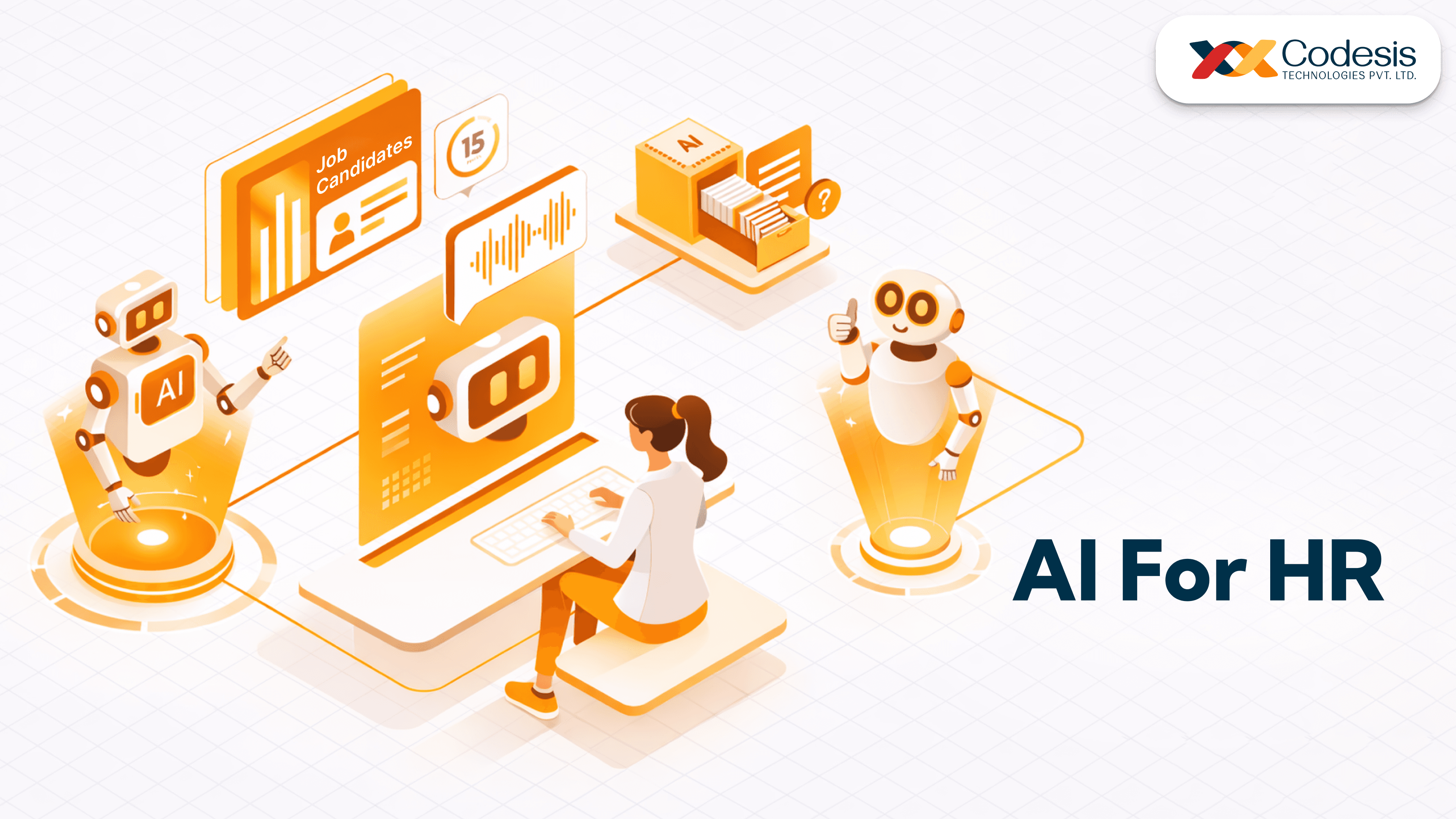
AI for HR refers to intelligent systems that automate, analyze, and support human resource processes such as hiring, workforce planning, and employee management. It helps HR teams make faster, data-driven decisions while reducing manual workload.
Contact US

What is AI for HR?
AI for HR refers to intelligent systems that automate, analyze, and support human resource processes such as hiring, workforce planning, and employee management. It helps HR teams make faster, data-driven decisions while reducing manual workload.
Contact US
What is AI for HR?
AI for HR refers to intelligent systems that automate, analyze, and support human resource processes such as hiring, workforce planning, and employee management. It helps HR teams make faster, data-driven decisions while reducing manual workload.
Contact US
What is AI for HR?
AI for HR refers to intelligent systems that automate, analyze, and support human resource processes such as hiring, workforce planning, and employee management. It helps HR teams make faster, data-driven decisions while reducing manual workload.
Contact US
Beyond this definition, these systems analyze data, recognize patterns, and automate routine human resource activities to support smarter decision-making. They help HR professionals process large volumes of workforce information faster than traditional methods. In real HR environments, these tools are commonly integrated into recruitment and workforce platforms to improve day-to-day operational efficiency.
Rather than functioning as standalone tools, AI for HR systems act as a decision-support layer embedded into recruiting platforms, performance management systems, and employee engagement tools. They can screen applications, surface insights, and identify trends that might otherwise go unnoticed.
You’ll often hear the broader term AI in HR used to describe this evolution. The goal is not to remove the human element, but to strengthen it, enabling HR leaders to act with clarity, fairness, and precision while reducing administrative burden.
Beyond this definition, these systems analyze data, recognize patterns, and automate routine human resource activities to support smarter decision-making. They help HR professionals process large volumes of workforce information faster than traditional methods. In real HR environments, these tools are commonly integrated into recruitment and workforce platforms to improve day-to-day operational efficiency.
Rather than functioning as standalone tools, AI for HR systems act as a decision-support layer embedded into recruiting platforms, performance management systems, and employee engagement tools. They can screen applications, surface insights, and identify trends that might otherwise go unnoticed.
You’ll often hear the broader term AI in HR used to describe this evolution. The goal is not to remove the human element, but to strengthen it, enabling HR leaders to act with clarity, fairness, and precision while reducing administrative burden.
Why AI Matters in HR Today
Why AI Matters in HR Today
Why AI Matters in HR Today
Why AI Matters in HR Today
Today’s workforce environment is more complex, data-rich, and fast-moving than ever. Teams must handle high applicant volumes, evolving employee expectations, and continuous organizational change. This is where AI for HR becomes especially relevant.
By automating repetitive processes and highlighting actionable insights, intelligent systems allow HR departments to operate proactively instead of reactively. Decision-making becomes evidence-based, workflows become smoother, and response times improve. In a landscape where talent competition is intense, the ability to move quickly and intelligently is a significant advantage.
Today’s workforce environment is more complex, data-rich, and fast-moving than ever. Teams must handle high applicant volumes, evolving employee expectations, and continuous organizational change. This is where AI for HR becomes especially relevant.
By automating repetitive processes and highlighting actionable insights, intelligent systems allow HR departments to operate proactively instead of reactively. Decision-making becomes evidence-based, workflows become smoother, and response times improve. In a landscape where talent competition is intense, the ability to move quickly and intelligently is a significant advantage.
Today’s workforce environment is more complex, data-rich, and fast-moving than ever. Teams must handle high applicant volumes, evolving employee expectations, and continuous organizational change. This is where AI for HR becomes especially relevant.
By automating repetitive processes and highlighting actionable insights, intelligent systems allow HR departments to operate proactively instead of reactively. Decision-making becomes evidence-based, workflows become smoother, and response times improve. In a landscape where talent competition is intense, the ability to move quickly and intelligently is a significant advantage.
Today’s workforce environment is more complex, data-rich, and fast-moving than ever. Teams must handle high applicant volumes, evolving employee expectations, and continuous organizational change. This is where AI for HR becomes especially relevant.
By automating repetitive processes and highlighting actionable insights, intelligent systems allow HR departments to operate proactively instead of reactively. Decision-making becomes evidence-based, workflows become smoother, and response times improve. In a landscape where talent competition is intense, the ability to move quickly and intelligently is a significant advantage.
Benefits of AI in HR
Benefits of Healthcare AI Solutions
Benefits of AI in HR
Benefits of AI in HR
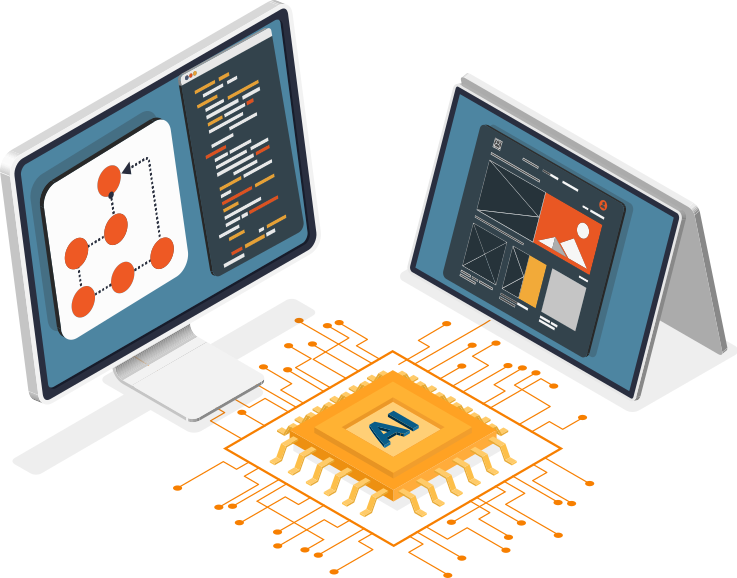
The practical advantages of adopting intelligent systems extend across nearly every HR function. When organizations evaluate the benefits of AI in HR, they typically see improvements in speed, accuracy, and overall employee experience.
A well-designed AI for HR framework can deliver measurable gains without disrupting existing workflows. Organizations implementing these tools commonly report more consistent hiring decisions and measurable efficiency improvements across HR operations.
These advantages don’t eliminate human oversight; they enhance it, allowing HR teams to focus on strategy, culture, and growth.
The practical advantages of adopting intelligent systems extend across nearly every HR function. When organizations evaluate the benefits of AI in HR, they typically see improvements in speed, accuracy, and overall employee experience.
A well-designed AI for HR framework can deliver measurable gains without disrupting existing workflows. Organizations implementing these tools commonly report more consistent hiring decisions and measurable efficiency improvements across HR operations.
These advantages don’t eliminate human oversight; they enhance it, allowing HR teams to focus on strategy, culture, and growth.
The practical advantages of adopting intelligent systems extend across nearly every HR function. When organizations evaluate the benefits of AI in HR, they typically see improvements in speed, accuracy, and overall employee experience.
A well-designed AI for HR framework can deliver measurable gains without disrupting existing workflows. Organizations implementing these tools commonly report more consistent hiring decisions and measurable efficiency improvements across HR operations.
These advantages don’t eliminate human oversight; they enhance it, allowing HR teams to focus on strategy, culture, and growth.
The practical advantages of adopting intelligent systems extend across nearly every HR function. When organizations evaluate the benefits of AI in HR, they typically see improvements in speed, accuracy, and overall employee experience.
A well-designed AI for HR framework can deliver measurable gains without disrupting existing workflows. Organizations implementing these tools commonly report more consistent hiring decisions and measurable efficiency improvements across HR operations.
These advantages don’t eliminate human oversight; they enhance it, allowing HR teams to focus on strategy, culture, and growth.
Faster hiring cycles
Faster hiring cycles
Faster hiring cycles
Faster hiring cycles
Automated screening reduces time spent reviewing applications while highlighting strong candidates.
Automated screening reduces time spent reviewing applications while highlighting strong candidates.
Automated screening reduces time spent reviewing applications while highlighting strong candidates.
Bias-aware decision support
Bias-aware decision support
Bias-aware decision support
Bias-aware decision support
Pattern analysis can surface inconsistencies and support fairer evaluations.
Pattern analysis can surface inconsistencies and support fairer evaluations.
Pattern analysis can surface inconsistencies and support fairer evaluations.
Workflow automation
Workflow automation
Workflow automation
Workflow automation
Routine tasks like scheduling, documentation, and onboarding become streamlined.
Routine tasks like scheduling, documentation, and onboarding become streamlined.
Routine tasks like scheduling, documentation, and onboarding become streamlined.
Data-driven insights
Data-driven insights
Data-driven insights
Data-driven insights
Workforce trends, engagement signals, and performance metrics are easier to interpret.
Workforce trends, engagement signals, and performance metrics are easier to interpret.
Workforce trends, engagement signals, and performance metrics are easier to interpret.
Improved employee experience
Improved employee experience
Improved employee experience
Improved employee experience
Faster responses and personalized interactions create smoother journeys.
Faster responses and personalized interactions create smoother journeys.
Faster responses and personalized interactions create smoother journeys.
How AI is Used in HR (Practical Use Cases)
How AI is Used in HR (Practical Use Cases)
How AI is Used in HR (Practical Use Cases)
Understanding real-world applications helps clarify how AI for HR creates value. Instead of abstract technology, think of it as a practical assistant embedded into everyday HR operations. Many organizations adopting AI in HR start with focused use cases and expand over time.
Understanding real-world applications helps clarify how AI for HR creates value. Instead of abstract technology, think of it as a practical assistant embedded into everyday HR operations. Many organizations adopting AI in HR start with focused use cases and expand over time.
Understanding real-world applications helps clarify how AI for HR creates value. Instead of abstract technology, think of it as a practical assistant embedded into everyday HR operations. Many organizations adopting AI in HR start with focused use cases and expand over time.
Common applications include
Common applications include
Common applications include
Together, these use cases demonstrate how AI for HR supports smarter, faster, and more consistent decision-making without removing human judgment from the process.
Together, these use cases demonstrate how AI for HR supports smarter, faster, and more consistent decision-making without removing human judgment from the process.
Together, these use cases demonstrate how AI for HR supports smarter, faster, and more consistent decision-making without removing human judgment from the process.
Recruitment screening
Recruitment screening
Intelligent filtering tools analyze resumes and candidate profiles to surface relevant matches quickly, enabling recruiters to focus on relationship-building rather than manual sorting.
Performance analytics
Data models identify trends in productivity, engagement, and goal alignment, helping leaders make informed coaching and development decisions.
Data models identify trends in productivity, engagement, and goal alignment, helping leaders make informed coaching and development decisions.
Workforce planning
Predictive insights support hiring forecasts, skill gap identification, and succession strategies — making long-term planning more reliable.
Predictive insights support hiring forecasts, skill gap identification, and succession strategies — making long-term planning more reliable.
Employee engagement tools
Sentiment analysis and feedback tracking highlight morale patterns, allowing early intervention when needed.
Why Choose Our AI Solutions for HR
Why Choose Our AI Solutions for HR
Why Choose Our AI Solutions for HR
Why Choose Our AI Solutions for HR
Modern HR teams need intelligent AI systems that go beyond automation. Our AI for HR solutions are designed to integrate directly into real-world recruitment, workforce planning, and employee management workflows, delivering measurable operational value from day one.
Built with hands-on implementation experience, our approach prioritises practical usability, secure data handling, and scalable architecture. Instead of experimental tools, we deploy production-ready systems that support consistent hiring decisions, actionable workforce insights, and long-term organisational growth.
Every solution is engineered for seamless integration, compliance awareness, and operational clarity, enabling HR teams to operate faster, smarter, and with greater confidence.
Modern HR teams need intelligent AI systems that go beyond automation. Our AI for HR solutions are designed to integrate directly into real-world recruitment, workforce planning, and employee management workflows, delivering measurable operational value from day one.
Built with hands-on implementation experience, our approach prioritises practical usability, secure data handling, and scalable architecture. Instead of experimental tools, we deploy production-ready systems that support consistent hiring decisions, actionable workforce insights, and long-term organisational growth.
Every solution is engineered for seamless integration, compliance awareness, and operational clarity, enabling HR teams to operate faster, smarter, and with greater confidence.
Modern HR teams need intelligent AI systems that go beyond automation. Our AI for HR solutions are designed to integrate directly into real-world recruitment, workforce planning, and employee management workflows, delivering measurable operational value from day one.
Built with hands-on implementation experience, our approach prioritises practical usability, secure data handling, and scalable architecture. Instead of experimental tools, we deploy production-ready systems that support consistent hiring decisions, actionable workforce insights, and long-term organisational growth.
Every solution is engineered for seamless integration, compliance awareness, and operational clarity, enabling HR teams to operate faster, smarter, and with greater confidence.
Intelligent recruitment screening
Intelligent recruitment screening
Intelligent recruitment screening
Intelligent recruitment screening
Automates candidate evaluation to reduce hiring time while improving selection consistency and accuracy.
Automates candidate evaluation to reduce hiring time while improving selection consistency and accuracy.
Automates candidate evaluation to reduce hiring time while improving selection consistency and accuracy.
Workforce analytics dashboards
Workforce analytics dashboards
Workforce analytics dashboards
Workforce analytics dashboards
Delivers real-time performance, engagement, and workforce trend insights for data-backed decision-making.
Delivers real-time performance, engagement, and workforce trend insights for data-backed decision-making.
Delivers real-time performance, engagement, and workforce trend insights for data-backed decision-making.
Automated document management
Automated document management
Automated document management
Automated document management
Securely structures and manages HR records to reduce administrative burden and improve data accessibility.
Securely structures and manages HR records to reduce administrative burden and improve data accessibility.
Securely structures and manages HR records to reduce administrative burden and improve data accessibility.
Compliance and policy monitoring
Compliance and policy monitoring
Compliance and policy monitoring
Compliance and policy monitoring
Supports adherence to organisational and regulatory standards through structured oversight mechanisms.
Supports adherence to organisational and regulatory standards through structured oversight mechanisms.
Supports adherence to organisational and regulatory standards through structured oversight mechanisms.
Performance and engagement insights
Performance and engagement insights
Performance and engagement insights
Performance and engagement insights
Identifies behavioural and performance patterns to enable proactive talent development and retention.
Identifies behavioural and performance patterns to enable proactive talent development and retention.
Identifies behavioural and performance patterns to enable proactive talent development and retention.
Frequently Asked Questions
Frequently Asked Questions
Frequently Asked Questions
Frequently Asked Questions
Is AI safe for HR decision-making?
Yes, AI in HR is designed to function as a decision-support system rather than a final decision-maker. With proper human oversight, governance controls, and transparent data models, it enhances consistency while maintaining human accountability and ethical responsibility.
Can AI replace HR professionals?
How does AI improve hiring accuracy?
Is adoption expensive or complex?
Can AI integrate with existing HR systems?
Transforming Industries with Technology
We work across industries to design and deploy intelligent, data-driven systems that solve real operational challenges. Every solution is built for scalability, security, and measurable business impact.
Industries We Serve
Transforming Industries with Technology
We work across industries to design and deploy intelligent, data-driven systems that solve real operational challenges. Every solution is built for scalability, security, and measurable business impact.
Industries We Serve
Transforming Industries with Technology
We understand that every business is unique and has specific needs and goals. Our tailored digital solutions are designed to meet the specific needs of each and every client irrespective of their company size and sector.
Industries We Serve
Transforming Industries with Technology
We work across industries to design and deploy intelligent, data-driven systems that solve real operational challenges. Every solution is built for scalability, security, and measurable business impact.
Industries We Serve
Transforming Industries with Technology
We work across industries to design and deploy intelligent, data-driven systems that solve real operational challenges. Every solution is built for scalability, security, and measurable business impact.
Industries We Serve
Transforming Industries with Technology
We understand that every business is unique and has specific needs and goals. Our tailored digital solutions are designed to meet the specific needs of each and every client irrespective of their company size and sector.
Industries We Serve
Transforming Industries with Technology
We work across industries to design and deploy intelligent, data-driven systems that solve real operational challenges. Every solution is built for scalability, security, and measurable business impact.
Industries We Serve
Contact Form
Contact Form
Connecting with us is just a message away, Get in touch for support and expert
guidance – your success is our priority.
Connecting with us is just a message away, Get in touch for support and expert
guidance – your success is our priority.