
Ai Solution For Business Everyone keeps saying artificial intelligence will disrupt entire industries soon. The truth is more interesting. It’s basically already happening, and 2026 is shaping up to be the year when experimental pilots become operational reality. The future of AI is not some distant horizon, especially as businesses increasingly adopt AI solutions to streamline operations and drive measurable growth. It is unfolding in boardrooms and server rooms right now, changing how businesses operate from the ground up.
Top AI Trends Revolutionizing Industries in 2026
1. Agentic AI Moving from Experimentation to Production
Remember when chatbots could barely handle a simple FAQ? That era feels ancient now. Agentic AI represents systems that can plan, reason and execute multi-step tasks autonomously. This shift reflects the growing adoption of AI agentic solutions that enable organisations to deploy autonomous systems capable of handling complex, multi-step workflows in production environments. Think of it like the difference between a calculator and an accountant. One performs discrete operations. The other understands context, makes judgment calls and completes entire workflows.
Organizations are finally deploying these agents in production environments. Not as experiments. Not as pilots. As core infrastructure.
2. Multimodal AI Becoming the Default Standard
Text-only AI models are becoming relics. Multimodal systems process images, video, audio and text simultaneously. This is a game-changer for industries dealing with complex, unstructured data. A manufacturing quality control system can now look at a product image, read the associated documentation and flag anomalies in a single pass.
3. AI Agents Transforming Workplace Dynamics
The shift here is subtle but profound. AI agents are not replacing workers wholesale. They are augmenting capabilities and reshaping job roles. Customer service teams now supervise AI agents handling routine inquiries while humans tackle escalations requiring empathy and nuanced judgment.
4. Responsible AI and Governance Frameworks
What drives me crazy is how many organisations rushed to deploy AI without governance structures. Now, regulators and customers both demand transparency. Companies scrambling to retrofit ethics into existing systems are learning an expensive lesson. Build governance in from the start. Retrofitting costs three times as much.
5. Domain-Specific and Small Language Models
Not every problem needs a massive general-purpose model. SLMs - Small Language Models - are gaining traction because they are faster, cheaper and often more accurate for specific use cases. A legal document analyser does not need to know how to write poetry. It needs deep expertise in contract law.
AI Transforming Core Business Functions
AI in Customer Service and Support Operations
AI in customer service has evolved beyond simple ticket routing. Modern systems analyse sentiment in real-time, predict customer churn and personalise interactions at scale. The result? Support teams handle complex cases while AI manages the volume. But what does this actually mean for customer satisfaction scores?
These advancements demonstrate how AI in customer service is evolving into a strategic function that improves response time, personalisation and operational efficiency.
AI in Transportation and Logistics
Route optimisation is just the beginning. AI in transportation now predicts maintenance needs before breakdowns occur, manages fleet allocation dynamically and even handles real-time rerouting during disruptions. One logistics company I worked with reduced fuel costs by 18% in six months just by implementing predictive routing.
AI in Financial Services
Fraud detection has been AI-powered for years. The new frontier in AI in financial services involves personalised wealth management, automated compliance monitoring and real-time risk assessment. Credit decisions that once took weeks now happen in minutes with greater accuracy.
AI in Supply Chain Management
Global supply chains are impossibly complex. AI in supply chain management tackles this complexity by predicting demand fluctuations, identifying potential disruptions and optimising inventory levels across thousands of SKUs simultaneously. The systems learn and adapt. They get smarter with every shipment.
This progress highlights how AI in supply chain management helps organisations forecast demand accurately, reduce disruptions and optimise inventory across global networks.
AI in Software Product Development
Code generation tools are just the visible tip. AI now assists with architecture decisions, automated testing, security vulnerability detection and technical debt analysis. Development teams are not writing less code. They are writing better code faster.
This transformation underscores how AI-driven software development services are accelerating product innovation through automation, testing intelligence and scalable system design.
Implementation Strategies and Challenges
Data Quality, Integration, and Infrastructure Readiness
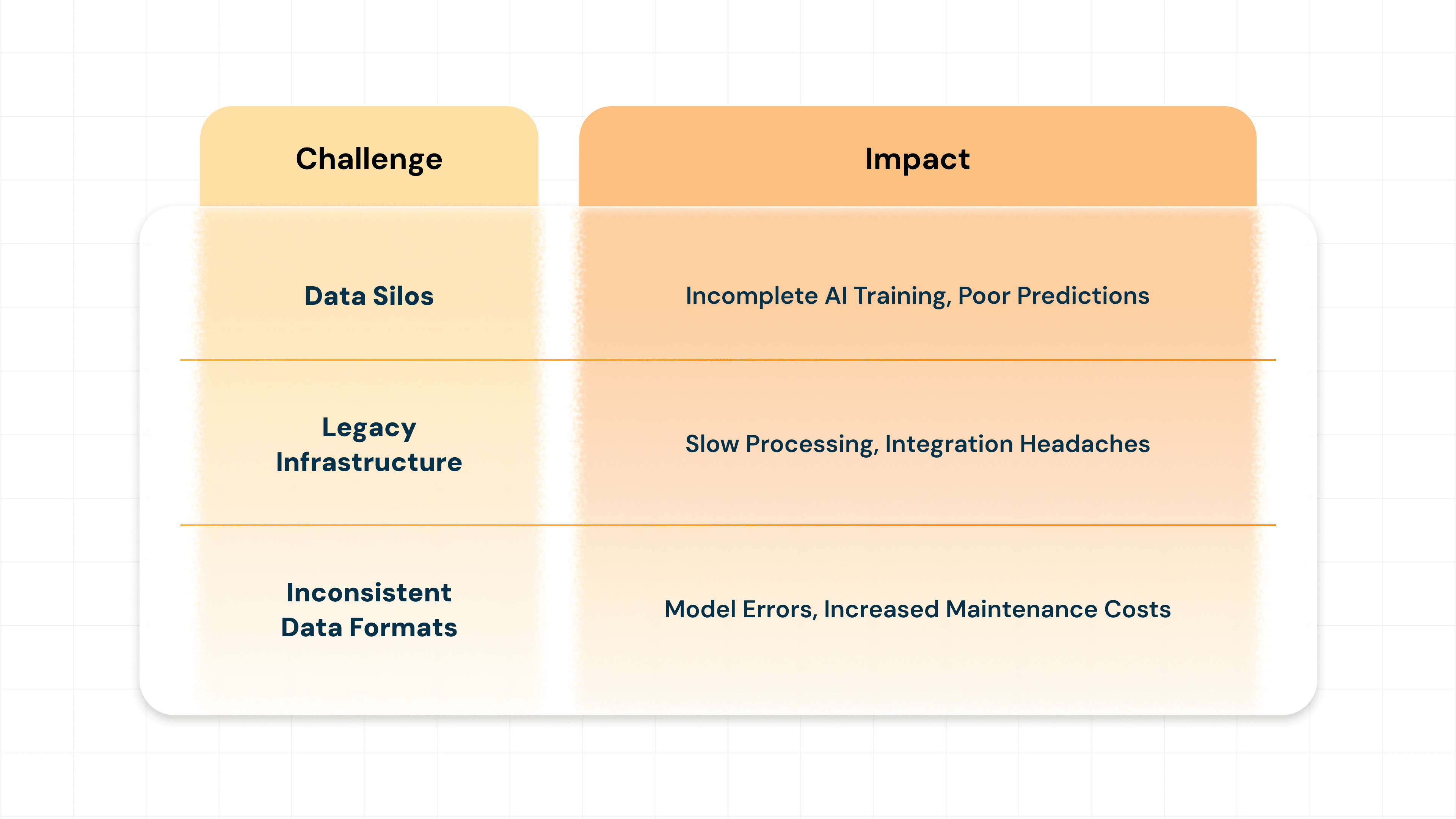
Here is an uncomfortable truth. Most AI projects fail not because of bad algorithms but because of bad data. Garbage in, garbage out applies more than ever. Organisations must invest in data infrastructure before chasing shiny AI capabilities.
Workforce Evolution and AI Skill Development
The future of AI in business in 2026 depends on human adaptation as much as technological advancement. Organisations need workers who understand AI capabilities and limitations. This is not about everyone becoming a data scientist. It is about AI literacy becoming as fundamental as computer literacy.
Measuring ROI and Long-Term Value Creation
Let me be honest about something frustrating. ROI measurement for AI remains challenging because benefits often appear in unexpected places. A customer service AI might reduce call volume while simultaneously improving product development through pattern detection in complaint data. Traditional ROI frameworks miss these interconnected benefits.
Security, Privacy, and Trust in AI Systems
AI systems handling sensitive data must earn trust through transparency. That means explainable decisions, robust security protocols and clear data handling policies. Customers increasingly demand to know how AI decisions affecting them are made.
Emerging AI Technologies: The Next Big Things
Generative AI: Content, art, and creativity
Generative AI is moving beyond novelty into practical applications. Marketing teams generate personalised content at scale. Design teams prototype rapidly. But the real magic happens when generative AI augments human creativity rather than replacing it.
Quantum AI: Supercharged problem-solving
Quantum computing and AI together could solve optimisation problems currently beyond reach. Drug discovery, materials science and climate modelling stand to benefit enormously. This technology is still maturing, but 2026 will see early commercial applications.
AI in biotechnology: Precision medicine and beyond
Protein folding predictions that once required years now take hours. Drug interaction modelling has accelerated dramatically. Personalised treatment plans based on individual genetic profiles are becoming a reality. This is precision medicine, actually delivering on decades of promise.
Concerns and Challenges in the AI Future
Job displacement and economic shifts
Some jobs will disappear. That is honest and unavoidable. But new roles emerge constantly. The challenge is managing transition speed and ensuring workers can adapt. History suggests technological shifts create more jobs than they destroy. The question is whether the transition period causes unacceptable harm.
Bias and ethical dilemmas in AI systems
AI systems can perpetuate and amplify existing biases. Hiring algorithms that discriminate. Lending models that disadvantage certain demographics. These are not hypothetical risks. They are documented problems requiring active mitigation. Sounds simple, right? It is not.
A Practical Perspective on the Future of AI from Codesis Technologies
Implementing AI successfully requires more than purchasing technology. It demands strategic alignment, organisational readiness and realistic expectations. The organisations winning with AI share common traits: they start with clear business problems, invest in data quality and maintain human oversight throughout.
Conclusion: The Future of AI in 2026 and Beyond
From Isolated Tools to Intelligent Systems
AI is transitioning from point solutions to integrated systems that span entire business processes. The future of AI lies in these connected, intelligent ecosystems rather than standalone applications.
Turning AI Potential into Measurable Business Value
Potential means nothing without execution. The gap between AI hype and AI reality closes when organisations focus relentlessly on measurable outcomes rather than technological sophistication.
What the Future of AI Means for Businesses Beyond 2026
AI adoption will accelerate. Organisations that invest now in infrastructure, talent and governance will have significant advantages. Those waiting for perfect technology will fall behind. The future rewards action over analysis paralysis.